

An IV cannula is a temporary access point into a vein, not a device to use for self-injection. A home care nurse for IV cannulation inserts the small, flexible tube into a vein in the hand or arm; it may stay in place for up to 72 hours, depending on care needs and the patient’s condition. Don’t put anything into it unless you’ve been specially trained by the team managing your treatment.
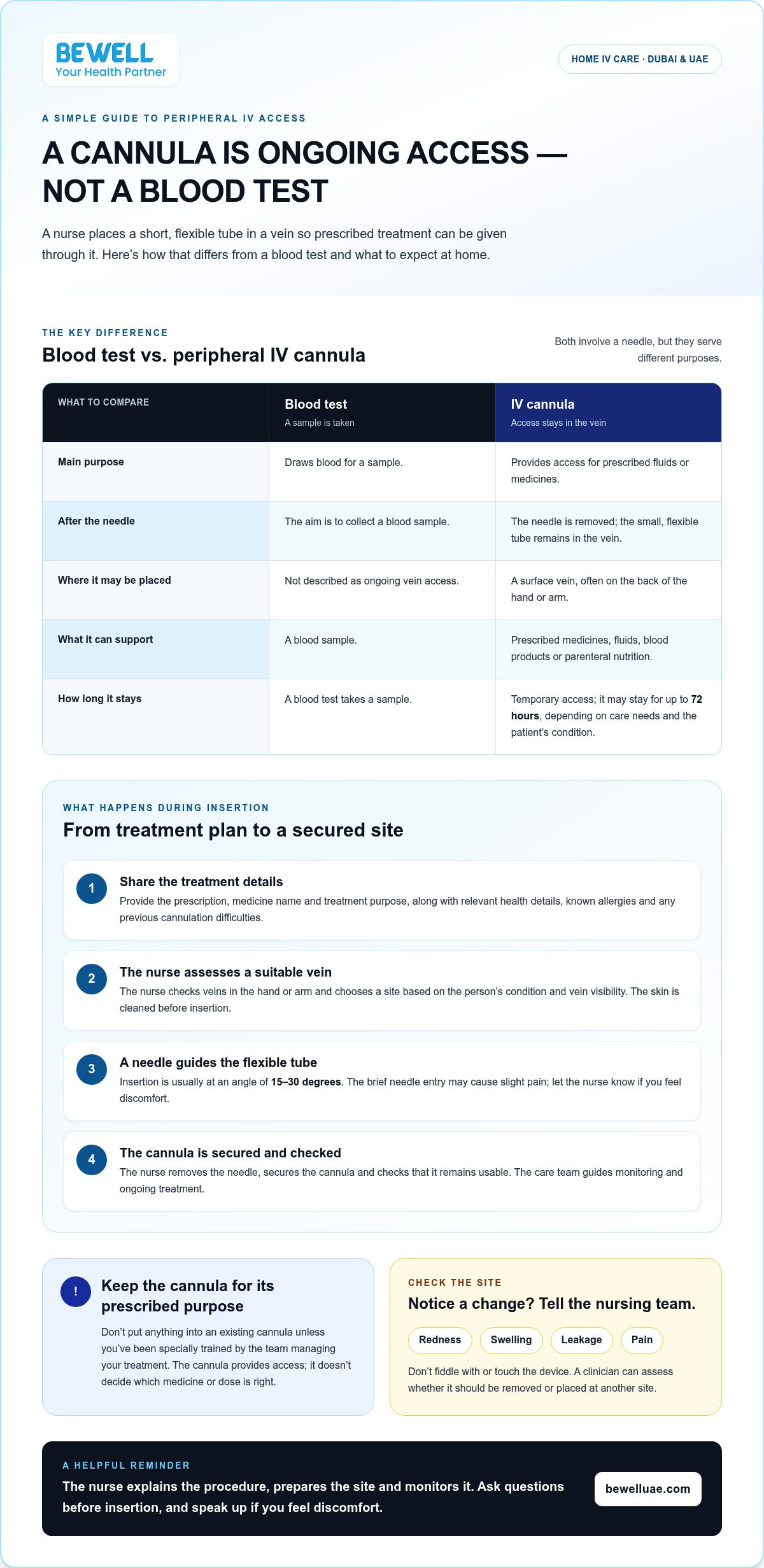
It’s understandable to want clear answers before a nurse arrives at your home. Cannulation is different from a blood test: a blood test takes a sample, while a cannula stays in the vein to provide access for prescribed fluids or medication. The nurse explains the procedure, prepares the insertion site and monitors it for signs such as redness, swelling or leakage.
This guide explains what to expect, how nurses support comfort and infection control, and what to know about cannula duration and injections through an existing line. You’ll also learn when the site needs attention, so you can feel prepared for care at home in Dubai and across the UAE.
Key Takeaways
- Understand how a flexible peripheral cannula provides access to a vein and what to expect during insertion.
- Learn practical ways a nurse can support comfort and reduce infection risk during cannulation.
- A cannula may stay in place for up to 72 hours, with its condition and the treatment plan guiding ongoing care.
- Know which changes around the site, such as redness, swelling or leakage, should be reported promptly.
- Never inject anything through an existing cannula unless you’ve been specially trained by the team managing your treatment.
What a peripheral IV cannula is and how it is inserted
A peripheral intravenous (IV) cannula is a short, flexible tube placed in a surface vein, often on the back of the hand or arm. It provides access for prescribed fluids or medicines, including antibiotics, without repeating a needle insertion for every dose. Venepuncture draws blood; cannulation leaves a device in the vein for ongoing access.
To arrange home cannulation, book a home-care nursing service and share the treatment details. Visit timing depends on your location, clinical urgency and nurse scheduling. Provide the prescription, medicine name, planned treatment, relevant health details, address and preferred visit time.
- Clarify the treatment plan. Share the clinician’s instructions before the visit, especially if the cannula is intended for prescribed antibiotics. The nurse needs to understand the medicine and treatment purpose before preparing for insertion. Include known allergies, previous cannulation difficulties and any concerns about the proposed hand or arm site.
- Choose a suitable vein. The nurse assesses veins in the hand or arm and selects an appropriate site. The skin is cleaned before insertion. Vein visibility and the patient’s condition can influence site selection, so the nurse assesses the person rather than choosing a location automatically.
- Understand the insertion. A needle guides the small cannula into the vein, then the flexible tube remains in place as the needle is removed. Insertion is usually at an angle of 15-30 degrees. The brief needle entry may cause slight pain; tell the nurse if you feel discomfort.
- Know what access is for. A peripheral cannula can provide short-term access for prescribed medicines, fluids, blood products or parenteral nutrition. For example, a clinician may prescribe an IV antibiotic through the cannula. The cannula provides access; it doesn’t decide which medicine or dose is appropriate.
- Keep the site protected. After insertion, the nurse secures the cannula and checks that it remains usable. Don’t fiddle with or touch the device. Regular care helps preserve patency and reduce complications, including infection, infiltration or phlebitis.
- Follow the home-care plan. Before leaving, understand how the cannula will be monitored and who is managing treatment. Check the site regularly for redness, swelling or leakage, and report changes to the nursing team. Don’t use the cannula for anything outside the prescribed treatment plan.
- Know when removal matters. A cannula is temporary access, not a permanent device. If it becomes painful, red, swollen or starts leaking, contact the team managing treatment for instructions. A clinician assesses whether to remove it or place a new cannula at another site.
Patient comfort and calming techniques
Before the visit, prepare the prescription and allergy details, and choose a comfortable place to sit or lie down. Tell the nurse about previous cannulation difficulties, needle anxiety, communication needs and any questions you want answered.
-
Explain the IV cannula to the patient
Ask the trained nurse to explain the peripheral intravenous cannula before insertion. Make sure you understand its purpose, how it will be secured and what sensations you might notice. Ask questions before giving consent, and say if you need information repeated or explained differently. Avoid agreeing to a procedure while key details remain unclear to you.
-
Use comfort and calming techniques
Tell the nurse what usually helps you stay calm, such as quiet conversation, slow breathing or having a support person nearby. A clear explanation and comfortable arm position can make the procedure easier to follow. Psychological approaches may help reduce pain or anxiety; medication may also be considered as a clinical intervention.
-
Adapt care to patient needs
Share any needs that could affect communication or positioning, including sensory sensitivities, limited mobility or previous difficult insertion. If you feel anxious, dislike needles or need information in a different format, explain this before the procedure. Ask the nurse to adapt explanations and positioning, and keep your arm relaxed if possible.
- Set up the visit area. Choose a clean, well-lit space with a stable chair or bed. Keep the arm supported on a firm surface, and move objects that might restrict the nurse’s access. A calm setting helps you focus on instructions instead of searching for a place to sit during preparation.
- Agree on a communication plan. Tell the nurse whether you prefer updates before each action or a brief explanation at the start. Agree on a simple way to pause if you feel overwhelmed. Speak up about discomfort rather than pulling your arm away suddenly, which can interrupt the procedure.
- Plan for children or support needs. If a child or an adult needing assistance is receiving care, share their communication preferences and what helps them feel settled. A familiar support person can offer reassurance when appropriate. Keep the insertion arm accessible, and let the nurse guide any movement during the procedure.
If routine screening is also part of your health planning, explore Health Checkup Packs as a separate option.
Cannula placement duration and site changes
How long a peripheral cannula remains in place depends on the treatment plan, the site and the patient’s condition. Use these steps to monitor the site and understand when nursing assessment matters.
- Follow the treatment plan. A cannula may remain for the duration of treatment if there’s no redness or pain around it. The planned fluids or medicines, your condition and the site’s appearance all matter. Don’t assume that every cannula must be replaced at the same time; follow the care plan and nursing assessment.
- Look at the site daily. During treatment at home, a nurse should assess the area around the cannula daily. Notice changes between visits too. Check the skin around the dressing for redness, swelling or leakage, and report what you see. These observations help the nurse assess whether the cannula remains suitable for use.
- Report discomfort or visible changes. Tell the nursing team if the site becomes red or swollen, feels painful, or leaks. These changes need assessment. The nurse may remove the cannula and place one at a fresh site. Don’t wait for the next scheduled medicine or fluids before reporting a concerning change.
- Keep the dressing secure and dry. A dressing protects the placement site and helps hold the cannula steady. If it becomes wet or dislodged, contact the nursing team for guidance about changing it. Avoid pulling at the dressing or moving the cannula yourself, since disturbing the site can affect its position.
- Ask about checks before medication. Before medication starts, the cannula is flushed and the surrounding site checked for redness or swelling. During home treatment, follow the nurse’s instructions about site checks and access. A cannula used after surgery or for prescribed fluids still needs assessment according to the treatment plan.
- Protect the cannula during daily activities. Don’t swim while a peripheral cannula is in place. Keep the dressing secured and avoid fiddling with or touching the device. If movement pulls on the tubing or dressing, pause and contact the nursing team for instructions rather than trying to adjust the placement yourself.
- Follow removal instructions. When the cannula is removed, a small dressing should remain over the site for 2 hours. Follow the nurse’s directions for removing it, and report any ongoing redness, swelling or leakage. The nurse documents site findings during care, helping track changes across treatment visits.
Cannulation procedure and infection-control precautions
For home IV treatment across Dubai, Sharjah, Abu Dhabi, and Ajman, have the clinician’s instructions and medication details ready. Before insertion, your professional home care nurse for IV cannulation explains the procedure and obtains your consent.
- Confirm the treatment plan. Share the intended medicine, fluids, and purpose of the peripheral IV cannula. For antibiotics, provide the instructions covering the planned treatment. These details help the nurse understand what access is needed and what will be administered. A referral document and treatment instructions serve different purposes, so focus on having the clinical plan available.
- Ask about training. Healthcare professionals performing intravenous cannulation need specialized training to carry out the procedure safely and effectively in a home setting. Ask the nurse to explain the planned steps, including site preparation and how the cannula will be secured. A clear explanation gives you a chance to raise concerns before insertion begins.
- Give consent after the explanation. The nurse should explain the procedure and obtain your consent before starting. Use this moment to ask about the reason for cannulation, the intended site, and what sensations to expect. If you don’t understand an instruction, ask for plain language before agreeing to proceed.
- Observe clean preparation. Hand hygiene and strict aseptic technique help reduce infection risk during insertion and removal. The nurse cleans the intended site and uses a disposable, single-use cannula. A cannula must never be reused, because reuse can cause serious infection. Keep the prepared area clear, and avoid touching the cleaned skin or equipment.
- Keep the insertion area undisturbed. After placement, the nurse secures the peripheral IV cannula with a clean dressing. Avoid fiddling with the device or touching the insertion point. If the dressing becomes wet or dislodged, contact your Bewell nursing team for instructions rather than attempting to reinsert or adjust the cannula yourself.
- Watch for possible complications. Infection, infiltration, phlebitis, and air embolism are recognized complications of cannulation. During treatment, report any new redness, swelling, pain, or leakage around the site immediately. These observations help the nurse assess the cannula and decide what action the treatment plan requires.
- Follow ongoing care instructions. Cannula care continues long after the insertion procedure is complete. The nurse checks the site regularly and supports safe access while treatment is being given. Ask how to report changes between visits and follow the care plan for administering medication. Do not put anything into the cannula unless specially trained by the team managing your treatment.
Always follow the exact guidance provided by your clinician unless the instructions from the nurse say otherwise. Understanding vein anatomy, as well as the risks and benefits of peripheral IV cannulation, supports safe practice, reduces medical errors and infection risk, and significantly improves the patient experience at home. Clinical audits and regional healthcare studies consistently highlight that maintaining strict aseptic technique during preparation, insertion, and removal is essential for patient safety.
Proper hand hygiene before and after the procedure remains a critical standard in professional nursing care. Healthcare providers must always adhere to protocols such as correctly scrubbing hands with alcohol and properly cleaning the insertion site using an appropriate antiseptic solution for the recommended duration. Ensuring that dressings are promptly changed whenever they become wet or dislodged further protects patients from potential bloodstream infections during home-based intravenous therapy.
Home IV injection through an existing cannula
An existing cannula doesn’t make home injection a do-it-yourself task. Use it only as directed by your treatment team, and never inject medication unless specially trained by the department managing your treatment.
- Confirm who is managing treatment. Before a planned dose, identify the clinical team responsible for the medication and cannula. Follow that team’s instructions for home administration. A cannula placed during a hospital visit is still subject to the treatment plan after discharge; its presence alone doesn’t authorize an injection.
- Check your training before handling the line. A patient should not put anything into a peripheral IV cannula unless specially trained by the department managing treatment. If you haven’t received that training, don’t inject, flush, attach equipment or adjust the line yourself. Contact the team for guidance on the next step.
- Keep medication details with the care plan. Have the prescribed medication instructions available for the trained nurse or treatment team. The medication, intended dose and timing must follow the patient’s plan. Don’t substitute a different medicine or use leftover medication because it appears suitable for intravenous use.
- Arrange assessment before administration. The trained nurse assesses the cannula and the surrounding site as part of patient care. Tell them about pain, redness, swelling, leakage or a loose dressing before medication is given. These changes matter because cannulation complications can include infection, infiltration and phlebitis.
- Keep the cannula secure. Leave the dressing and device in place, and avoid touching or fiddling with them. Don’t try to repair a loose connection or reposition the cannula. If the line appears displaced or the dressing is wet, stop and contact the team managing treatment for instructions.
- Know when to pause treatment. If you notice new discomfort, redness, swelling or leakage, don’t proceed with an injection yourself. Report the change to the nursing team so they can assess the site and direct care. A fresh assessment is more appropriate than assuming an existing cannula remains usable.
- Plan each visit around the prescription. Share the treatment instructions, medication information and any site changes with the visiting nurse. If a hospital discharge plan includes home doses, keep those instructions available. The nurse can then relate the cannula assessment to the prescribed treatment instead of relying on memory.
- Use professional support for home treatment. Home IV care requires coordination between the medication plan, cannula assessment and the person administering treatment. If you’re not specially trained, leave the line untouched and arrange support from the team managing care. This keeps a home injection within supervised patient care.
Bewell: Health Checkup Packs
Bewell offers Health Checkup Packs for people arranging routine health checks alongside treatment planning. If you’re receiving prescribed IV care, keep the cannula and medication plan under the team managing your treatment. A checkup pack is a separate service, not a substitute for clinical assessment of an IV site or advice about injections.
Depending on your health needs, Bewell also offers Blood Tests and Health Scans. For IV drips or injections, Bewell’s IV DRIPS & INJ service may be relevant. Choose the service that fits your needs, and leave treatment decisions to the healthcare professional overseeing your care.
Contact Bewell to discuss its health services.
Plan your next step with confidence
Before arranging home treatment, decide what support you need and keep your healthcare professional’s care plan at the centre of that decision. A home care nurse for IV cannulation may support treatment at home, while the prescribing team remains responsible for the medication plan. Keeping those roles clear helps you focus your next conversation on the right need.
For related health services, Bewell offers Health Checkup Packs, Blood Tests and IV DRIPS & INJ. Choose the service that fits your needs, and follow professional guidance for treatment or injection decisions. If you’re considering home care, contact Bewell to discuss the support you need.
A clear plan makes it easier to take the next step. You’re ready to move forward with care that fits your needs.
Frequently Asked Questions
What is IV Cannulation?
IV cannulation provides temporary access to a vein through a small, flexible tube called a cannula. Unlike a blood draw, which removes a sample, the cannula provides a route for prescribed treatment. A home care nurse for IV cannulation uses this access as directed by the treatment plan. For example, a clinician may prescribe intravenous medication to be given through a vein.
What qualifications and licenses must a home care nurse have to perform IV cannulation in the UAE?
A healthcare professional performing IV cannulation needs relevant procedural training, and clinical skills should be formally assessed and kept current. Licensing requirements are separate from cannulation training. In Dubai, Sharjah, Abu Dhabi and Ajman, check that the nurse’s professional licence is valid for the emirate and care setting. Also establish who is responsible for the treatment plan and follow-up.
What are the risks and warning signs of IV cannulation complications at home?
Complications can include infection, infiltration, phlebitis or, rarely, air embolism. Watch for new pain, redness, swelling, leakage or a shifted dressing. These changes need prompt attention from the nursing team managing treatment. Don’t try to reposition the cannula or continue an injection yourself; report what you notice and follow the team’s instructions.
How do home IV cannulation services compare with clinic or hospital treatment in the UAE?
Home care brings a prescribed nursing procedure to the patient’s residence, while clinic or hospital care takes place at a healthcare facility. The choice depends on the treatment plan, the patient’s condition and the level of monitoring needed. A home visit may suit planned care when the treating team considers it appropriate; facility-based care keeps treatment within that setting.
What is included in a home IV cannulation service, and are IV fluids or medicines charged separately?
The nurse explains the procedure, obtains consent, assesses and cleans the site, inserts and secures the cannula, and checks it. The cannula provides access for prescribed fluids or medicines; separate charges are not established here.

Article by
Ph.Fares
He is a pharmacist, healthcare entrepreneur, and preventive healthcare advocate with a Bachelor of Pharmacy from the University of Sharjah. He is a Health Coach at Bewell Therapeutic Services in the UAE, where he focuses on making preventive healthcare more accessible through digital health solutions, laboratory testing, health screenings, and personalized checkup packages.
With experience spanning pharmacy practice, medical sales, laboratory services, healthcare marketing, and business development, Fares combines pharmaceutical knowledge with commercial and technological expertise. His professional mission is to promote health awareness, encourage early disease detection, and help individuals make informed decisions about their health through accessible, patient-centered healthcare services.
