

A normal-feeling day doesn’t rule out prediabetes. A pre-diabetic screening test in Dubai can identify blood sugar that’s above normal but below the diabetes range. According to the American Diabetes Association, an HbA1c result from 5.7% to 6.4% falls in the prediabetes range.
It’s understandable to wonder which test gives the clearest answer and whether you need to fast before a blood test. Interpretation depends on the method: a fasting glucose test and a two-hour oral glucose tolerance test measure blood sugar differently, so their thresholds aren’t interchangeable.
This guide explains what prediabetes means, how HbA1c, fasting blood glucose and the oral glucose tolerance test are used, and what their thresholds indicate. You’ll also learn when fasting is needed and how impaired glucose tolerance relates to prediabetes, so you can understand what a screening result says and what it doesn’t.
Key Takeaways
- Learn how fasting plasma glucose and an oral glucose tolerance test can reveal different aspects of blood sugar regulation.
- Find out which screening methods require fasting and what to expect from HbA1c testing.
- See how impaired glucose tolerance fits within prediabetes screening, and why the test method matters when interpreting a result.
- Compare the prediabetes thresholds with the diabetes range, including the results that may call for follow-up testing.
- Understand who may benefit from screening in Dubai and how often testing may be considered based on risk and previous results.
Could this actually be impaired glucose tolerance, not prediabetes?
Prediabetes describes blood glucose levels above normal but below the diabetes range. The test used matters: fasting plasma glucose, HbA1c, and an oral glucose tolerance test measure different patterns.
Fasting Plasma Glucose Testing
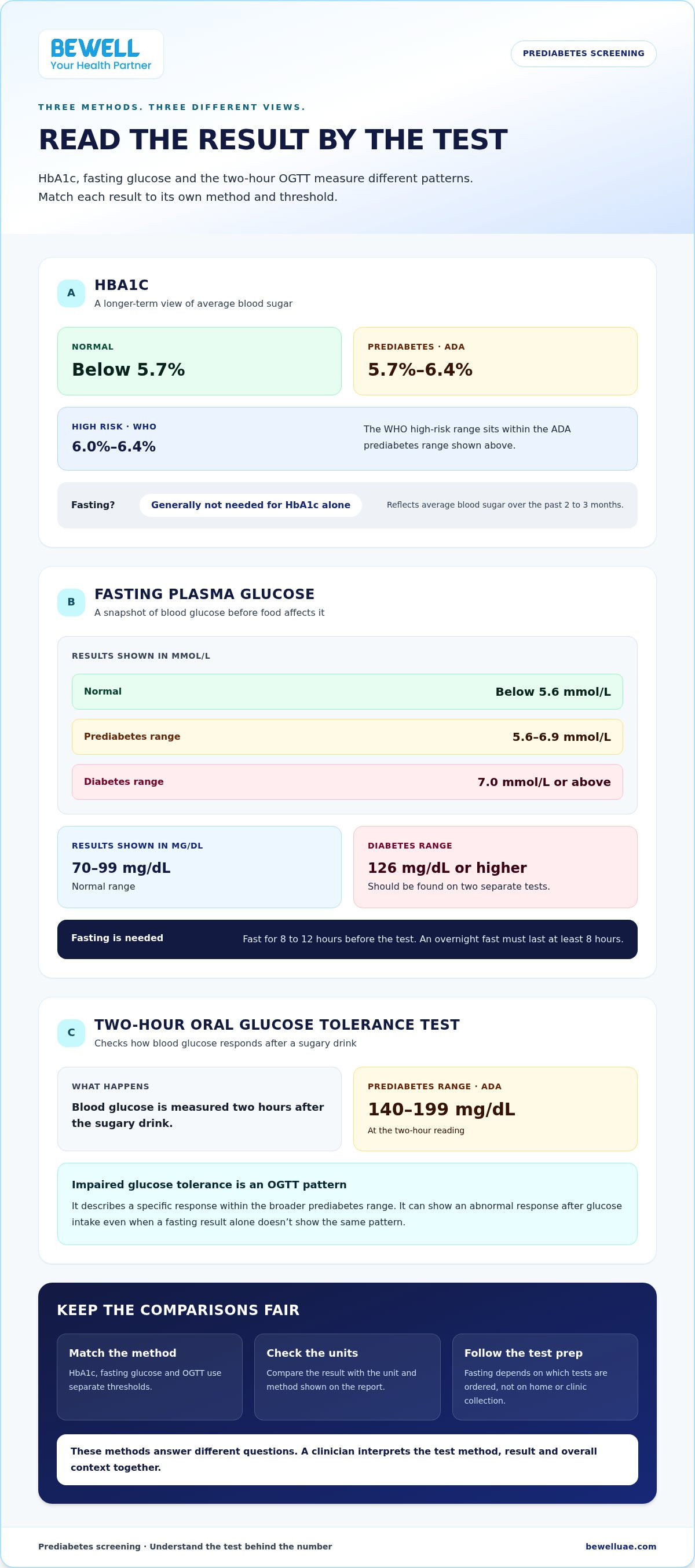
Fasting plasma glucose testing measures blood glucose after an overnight fast. It gives a snapshot of glucose levels before food affects them, so preparation matters for a meaningful result. Fast for 8 to 12 hours before the test; an overnight fast must last at least 8 hours. A result in the impaired range may prompt an oral glucose tolerance test to assess the response after a sugary drink.
Understanding Result Ranges
HbA1c and fasting glucose use separate thresholds, so interpret each result against its own range. The American Diabetes Association places HbA1c from 5.7% to 6.4% in the prediabetes range; below 5.7% is normal. The World Health Organization defines high risk using HbA1c from 6.0% to 6.4%. For fasting glucose, 5.6 to 6.9 mmol/L is the prediabetes range, while below 5.6 mmol/L is normal.
Fasting glucose also appears in milligrams per decilitre. A result of 70–99 mg/dL is normal, while 126 mg/dL or higher is in the diabetes range and should be found on two separate tests. In mmol/L, 7.0 or above indicates diabetes. These are not interchangeable interpretations of a single test: compare the result with the unit and method shown on the report.
Impaired glucose tolerance is identified through the two-hour oral glucose tolerance test, or OGTT. After a person consumes a sugary drink, the test measures blood glucose two hours later. According to the American Diabetes Association, a two-hour result from 140 to 199 mg/dL is in the prediabetes range. This can reveal an abnormal response after glucose intake, even when a fasting result alone doesn’t show the same pattern.
That distinction explains why impaired glucose tolerance and prediabetes aren’t competing diagnoses. Impaired glucose tolerance describes a specific OGTT pattern within the broader prediabetes range. An HbA1c test provides another view, reflecting average blood sugar over the past 2 to 3 months. A clinician interprets the method, result, and overall context together rather than treating every test threshold as identical.
Other blood tests may add context to screening. A lipid profile can be done alongside diabetes screening, while insulin testing may be considered when risk factors are present. Neither test replaces glucose measurements or uses the same result ranges. Follow the fasting instructions for your glucose test, since results depend on collecting the sample under the specified conditions.
Do I need to fast before a diabetes test at home in Dubai?
Fasting depends on which blood test is ordered, not on whether collection happens at home or in a clinic. A standalone HbA1c test generally doesn’t require fasting, while fasting plasma glucose testing does. If an order includes both, follow the preparation instructions for the glucose test so food doesn’t affect that measurement.
HbA1c reflects average blood sugar over the past 2 to 3 months. It can help identify a longer-term pattern rather than a single reading after a meal. By contrast, fasting glucose measures blood glucose after an overnight fast. These methods answer different questions, so the test names on your order matter.
At-home testing follows the same basic testing requirements as clinic testing. Before a home blood draw, check which tests are included and whether any require fasting. For fasting glucose, follow the overnight-fasting instruction described earlier. If the order includes only HbA1c, fasting isn’t usually needed for that test. Water and other preparation instructions should follow the guidance provided with the test.
Symptoms can prompt screening, but having no symptoms doesn’t rule out a blood sugar concern. Possible symptoms include fatigue, increased thirst, frequent urination, blurred vision, slow wound healing and unexplained weight change. Diabetes can also occur without noticeable symptoms, so screening may be useful even when you feel well.
Insulin helps regulate blood glucose, but a glucose test and an insulin level test measure different things. A lipid profile may also be tested alongside diabetes screening. These additional biomarkers can add context to an assessment; they don’t replace HbA1c or glucose measurements. The combination depends on the screening purpose and relevant risk factors.
Home testing packages can differ by the biomarkers included and the collection arrangements. The cost depends on the requested tests and collection arrangements, and is provided after a quote request. Compare package contents by checking whether they include HbA1c, fasting glucose, or additional tests such as a lipid profile. A package with more biomarkers isn’t automatically more suitable for every screening question.
If you’re arranging blood screening in Dubai, review the blood testing information alongside the test preparation guidance. Matching the test to the question helps you arrive prepared and understand what each result can show. Bring the test order or list of requested biomarkers to the collection appointment, whether collection is arranged at home or through a clinic.
What is the difference between HbA1c and a fasting blood sugar test?
HbA1c and fasting glucose show different parts of your blood sugar picture. HbA1c reflects average blood sugar over the past 2 to 3 months. Fasting glucose measures blood glucose after an overnight fast. A doctor may compare these results or use an oral glucose tolerance test when the pattern needs further assessment.
The oral glucose tolerance test (OGTT) checks how blood glucose responds after a sugary drink. The two-hour result can identify impaired glucose tolerance, a specific pattern within the prediabetes range. According to the American Diabetes Association, a result from 140 to 199 mg/dL falls in that range. This helps explain why a fasting result and an OGTT result may not tell the same story.
Prediabetes is the broader category: blood sugar is above normal but below the diabetes range. Impaired glucose tolerance describes an oral glucose tolerance test (OGTT) result, rather than a separate competing condition. For example, someone may have a borderline fasting result and an abnormal two-hour result. The test method matters when a doctor interprets findings and considers follow-up testing.
Thresholds also vary by test. The American Diabetes Association places HbA1c from 5.7% to 6.4% in the prediabetes range. Fasting glucose from 5.6 to 6.9 mmol/L is also within the prediabetes range. These measurements use different units and reflect different time windows, so compare each result with the matching test name and units on the report.
Continuous glucose monitoring uses a sensor to track glucose levels over time, rather than producing one laboratory reading. That record can show rises and falls around meals or activity. It provides a different kind of information from HbA1c, fasting glucose, or an OGTT. A doctor interprets the monitoring pattern in context; the screening thresholds above apply to the named blood tests.
Random blood glucose testing measures glucose at the time of collection, without requiring a planned fasting period. A recent meal can affect the reading, so the result needs its timing and context. The supplied screening thresholds for prediabetes apply to HbA1c, fasting glucose, and the two-hour OGTT, not to an unspecified random reading. Frequent thirst or urination may prompt a discussion about testing.
For a useful comparison, note the test name, result, unit, and whether you had fasted. A value close to a threshold can have a different meaning depending on whether it came from fasting glucose, HbA1c, or the OGTT. Keeping those details together helps a doctor explain what the result indicates and whether another test would clarify your glucose levels.
Prediabetes screening thresholds
Screening identifies blood sugar above normal but below the diabetes range. The test method and units determine how to interpret each threshold.
Identifying Prediabetes
Prediabetes is identified when HbA1c, fasting glucose, or a two-hour OGTT result falls within its specific range. The American Diabetes Association places HbA1c from 5.7% to 6.4% and a two-hour OGTT result from 140 to 199 mg/dL in the prediabetes range. Comparing the test name, value, and unit helps you understand what was measured.
Defining Prediabetes
Prediabetes means blood sugar is higher than normal but not high enough to qualify as diabetes. The World Health Organization defines high risk using an HbA1c range of 6.0% to 6.4%. Thresholds can differ between organizations, so the report’s test method and the reference criteria used both matter when discussing a result.
Fasting glucose has its own thresholds. A result below 5.6 mmol/L is normal, while 5.6 to 6.9 mmol/L is in the prediabetes range. Fasting glucose of 7.0 mmol/L or above indicates diabetes. In the other commonly used unit, 70–99 mg/dL is normal and 126 mg/dL or higher is in the diabetes range, requiring findings on two separate tests. Don’t compare figures across units without checking the measurement system.
In Dubai, screening can identify blood sugar patterns before they reach the diabetes range. Relevant risk factors include family history, physical inactivity, weight concerns, high blood pressure, high cholesterol and a history of gestational diabetes. A risk assessment may consider medical history, lifestyle and family history alongside test results. Prediabetes can develop without noticeable symptoms, so both risk factors and results help guide follow-up.
After identification, lifestyle changes can help reduce the risk of progression to type 2 diabetes. Recommendations may include healthy eating, regular physical activity, stress reduction, and weight management. Guidance cited for prevention includes losing 5% to 7% of body weight and exercising 150 minutes per week. These goals are practical discussion points for planning changes around daily routines.
Monitoring tracks whether blood glucose levels change over time. People with prediabetes should be tested annually, while a follow-up test in 3 months may be advised. A clinician may also recommend lifestyle support, dietary advice, activity planning, or medication when needed. The next step depends on the test result, risk factors, and previous measurements.
Diabetes and pre-diabetes screening in Dubai
A doctor’s referral is separate from the blood test’s diagnostic criteria. Whether you need an appointment depends on how the sample is collected; a clinician can help interpret results and decide on follow-up.
Screening in Dubai is worth considering before symptoms appear. Blood sugar levels can remain elevated for years without obvious signs, and diabetes may have no noticeable symptoms. Up to 30% of adults in the UAE are estimated to have diabetes or prediabetes. A screening result can identify a pattern that deserves attention, but it must be read alongside the test type and personal risk factors.
Age and health history can help guide when to be tested. Adults aged 35 and older should be screened for prediabetes and type 2 diabetes. Other screening guidance points to regular testing from age 25 for South Asian residents, annual screening from age 30 for people with a first-degree relative diagnosed with diabetes, and annual testing for adults over 40. These recommendations reflect different risk profiles, not one schedule for everyone.
Consider risk factors such as family history, physical inactivity, weight concerns, high blood pressure, high cholesterol and previous gestational diabetes. For example, a sedentary lifestyle and a close relative’s diagnosis may make screening more relevant. Risk assessment can include medical history, lifestyle, family history, BMI and blood glucose levels. These details provide context for the result but don’t replace testing.
The next screening interval depends partly on the result. Adults with normal results may repeat screening every 3 years. People with prediabetes should be tested annually, while a follow-up test in 3 months may be advised. A doctor may also recommend annual HbA1c testing for people with risk factors. These intervals support monitoring for changes in glucose levels.
A positive screening result does not mean every person needs the same treatment. Follow-up may include lifestyle and dietary advice, weight and activity planning, medication when needed, and ongoing monitoring. The Diabetes Prevention Program study found lifestyle changes reduced progression to type 2 diabetes by 58%. Prevention guidance also includes aiming for 5% to 7% weight loss and 150 minutes of exercise per week. These are discussion points for a plan suited to your health and daily routine.
Arrange a blood test to include screening in your preventive health plan.
Bewell: Health Checkup Packs
Bewell offers Health Checkup Packs and Blood Tests as a practical next step when you’re ready to arrange screening. A blood test can help measure glucose or HbA1c, while the right option depends on the screening you need and its preparation requirements. Use the test name and units on your report when discussing results with a healthcare professional.
If you’re monitoring a previous result or screening because of risk factors, keeping your results together can make follow-up easier. Bewell’s Health Checkup Packs offer a way to plan preventive checks alongside individual Blood Tests.
For more information, contact Bewell or visit bewelluae.com.
Make your next screening step count
A screening result can start a more informed conversation about your health. Before your next test, note any family history, previous results or questions about preparation. This context can help you discuss which screening approach suits your needs and what follow-up may make sense. If you’re considering a pre-diabetic screening test in Dubai, take a step towards a clearer health plan.
Bewell offers Health Checkup Packs and Blood Tests, alongside IV DRIPS & INJ. For screening, focus your enquiry on the blood test or checkup that suits your needs.
A thoughtful next step today can help you make better-informed health decisions.
Frequently Asked Questions
WHAT IS PREDIABETES?
Prediabetes is a blood sugar state that falls between normal levels and the diabetes range. It can be identified through screening before a person notices symptoms. For example, an HbA1c result can reflect a longer-term pattern, while fasting glucose reflects a single test after fasting. The distinction matters because the result can guide monitoring and a conversation about steps to reduce future risk.
What Is Pre-Diabetes?
“Pre-diabetes” is another spelling of “prediabetes”; both terms describe the same condition. It isn’t the same as a diabetes diagnosis, and it doesn’t mean diabetes is inevitable. A result should be interpreted using the test type and its units. For instance, an HbA1c percentage can’t be compared directly with a glucose result reported in mmol/L or mg/dL.
Is this covered by insurance?
Coverage depends on your individual insurance policy and benefits. Check the policy wording for preventive screening, outpatient laboratory tests, referral requirements, and any approval conditions. Also review whether the benefit applies to the specific test requested, such as HbA1c or fasting glucose. Keep the test order and itemised invoice, if provided, so you can submit the appropriate documents under your insurer’s process.
What happens if my diabetes test result is abnormal?
An abnormal result needs interpretation in context, not an immediate conclusion based on one number. Note the test name, units, fasting status and collection date, then discuss them with a healthcare professional. They may recommend repeat testing or another method to clarify the findings. For example, a follow-up OGTT can show how blood sugar responds after a sugary drink.
Who Should Get This Screening Package?
Screening is particularly relevant for adults aged 35 and older, and earlier consideration may apply with specific risk factors. Guidance includes regular testing from age 25 for South Asian residents, annual screening from age 30 for people with a first-degree relative with diabetes, and annual testing for adults over 40. Family history, inactivity, weight concerns, high blood pressure, and prior gestational diabetes also matter.
What blood tests screen for prediabetes (HbA1c, fasting glucose, or oral glucose tolerance test)?
HbA1c, fasting plasma glucose, and the oral glucose tolerance test are used to assess blood sugar in different ways. HbA1c reflects a longer-term average; fasting glucose captures a reading after fasting; and the OGTT measures glucose response after a sugary drink. The test selected depends on the screening question and preparation requirements. A clinician may use another test when a result needs clarification.
What are the diagnostic thresholds for prediabetes for HbA1c and blood glucose?
The American Diabetes Association places HbA1c from 5.7% to 6.4%, fasting glucose from 5.6 to 6.9 mmol/L, and a two-hour OGTT result from 140 to 199 mg/dL in the prediabetes range. The World Health Organization defines high risk using HbA1c from 6.0% to 6.4%. Compare a result only with the threshold for its specific test and unit.
Where can I get a prediabetes screening test in Dubai?
In Dubai, Bewell offers Blood Tests and Health Checkup Packs for preventive screening. Its services also cover Sharjah, Abu Dhabi and Ajman. Choose a test based on your screening needs, and follow its preparation instructions. If you already have results, keep the report handy to discuss the test name, units and possible follow-up with a healthcare professional.

Article by
Ph.Fares
He is a pharmacist, healthcare entrepreneur, and preventive healthcare advocate with a Bachelor of Pharmacy from the University of Sharjah. He is a Health Coach at Bewell Therapeutic Services in the UAE, where he focuses on making preventive healthcare more accessible through digital health solutions, laboratory testing, health screenings, and personalized checkup packages.
With experience spanning pharmacy practice, medical sales, laboratory services, healthcare marketing, and business development, Fares combines pharmaceutical knowledge with commercial and technological expertise. His professional mission is to promote health awareness, encourage early disease detection, and help individuals make informed decisions about their health through accessible, patient-centered healthcare services.
