

Symptoms alone can’t confirm heavy metal exposure. Heavy metals testing in Dubai measures selected metals, such as lead, mercury, arsenic and cadmium, in a sample. The right test depends on the suspected metal, when exposure may have occurred and the clinical context. Some blood tests may also include aluminum.
It’s understandable to want clear answers when fatigue, headaches or other changes affect how you feel. These symptoms can have many causes, and exposure may not cause obvious signs at first. Testing is most useful when it addresses a specific concern and is interpreted alongside your health and exposure history.
This guide explains what testing can check, when symptoms or possible exposure may prompt a conversation with a healthcare professional, and how booking and sample collection work in Dubai. You’ll also learn how different sample types inform testing and why results need careful interpretation before deciding on next steps.
Key Takeaways
- Exposure can come from several everyday or work-related sources, so noting where and when contact may have occurred can help guide testing.
- Fatigue, weakness or frequent headaches may prompt a closer look, but these symptoms can also have other causes.
- Blood, urine and hair tests provide different kinds of information; the suspected metal and exposure timeline help determine which sample is relevant.
- Home sample collection in Dubai can be arranged, with a DHA-certified nurse collecting the sample for laboratory analysis.
- Testing can help clarify possible exposure and inform next steps, while results need to be considered alongside symptoms and health history.
What symptoms may suggest heavy metal exposure?
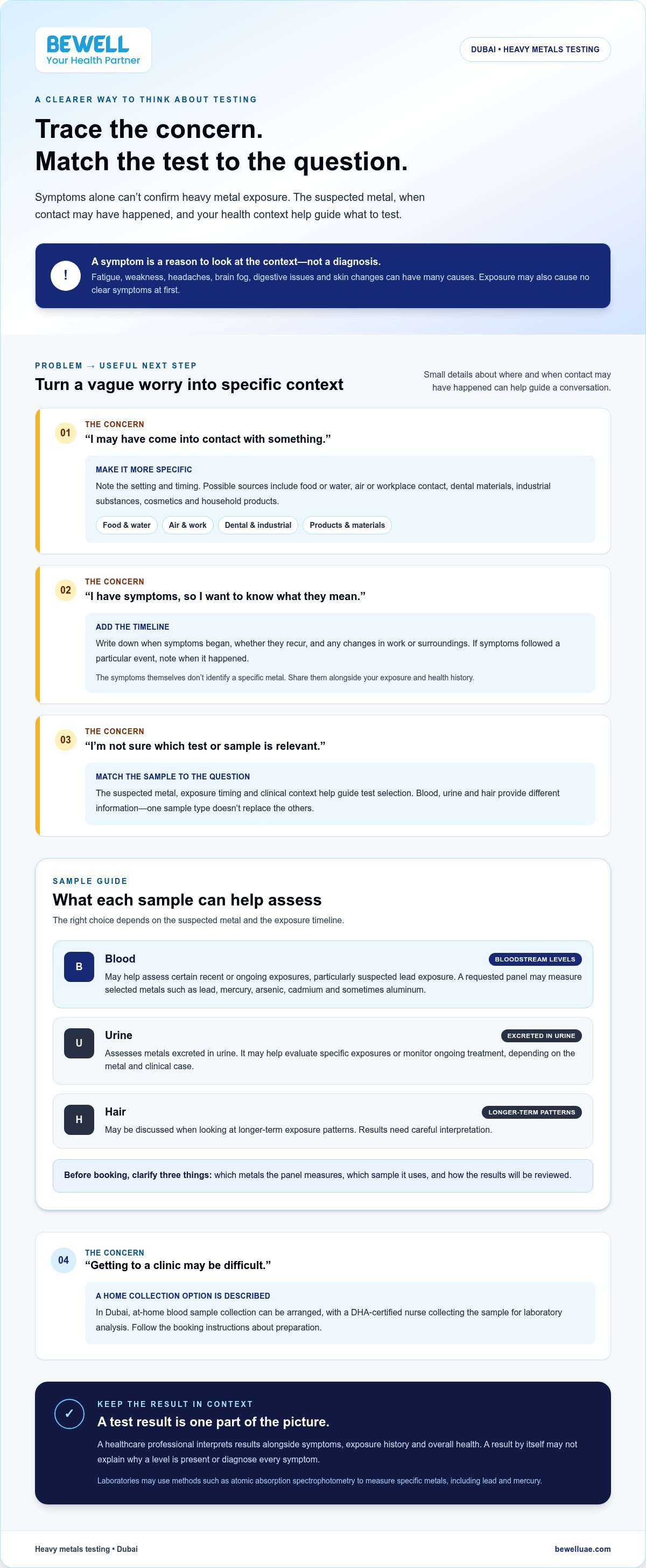
Possible exposure can come from food, water, air, workplace contact, dental materials or industrial sources. In Dubai, note the setting and timing, such as a new job task, a change in water source or contact with a specific material. You can also record cosmetics and household products as possible concerns, including product names or labels, without assuming they are the cause.
Symptoms don’t identify a particular metal on their own. Fatigue, weakness, frequent headaches, brain fog, digestive issues and skin changes can have many causes. Exposure may also cause no clear symptoms at first. Effects depend on the metal, dose, duration of contact and a person’s health. For example, fatigue after a workplace change needs context, not an automatic conclusion about toxicity.
- Food and water: Record any specific item or source that raised concern, and when exposure may have occurred.
- Air and work: Note dust, fumes, tasks, and materials encountered in the work environment.
- Dental and industrial sources: Mention relevant dental materials or contact with industrial substances during a consultation.
- Cosmetics and household materials: Bring product names or packaging when a particular item is part of the concern.
Choose testing based on the suspected metal and exposure timeline, not symptoms alone. A blood test may help assess certain recent or ongoing exposures, including lead. Urine testing can assess metals excreted in urine, depending on the metal and clinical case. Hair analysis may be discussed for longer-term exposure patterns, but results need careful interpretation. Each sample type provides different information. A clinical consultation can connect symptoms and exposure history with an appropriate test, rather than treating a broad symptom list as a diagnosis.
Before a consultation, note when symptoms began, whether they recur, and any changes in your work or surroundings. Include product or material names, relevant workplace records and any licence details that identify substances you handle. This gives the healthcare professional specific context. If symptoms began after a particular event, record when; if fatigue or headaches have several possible triggers, note those too. For heavy metals testing in Dubai, the suspected metal, exposure timing, symptoms and overall health guide test selection. Results should be reviewed alongside these details, not treated as a stand-alone explanation for how you feel.
What is heavy metal and toxicity screening?
A toxic and heavy metals blood test measures selected metals in a blood sample. Depending on the panel requested, it may include lead, mercury, arsenic, cadmium and aluminum. The result shows levels detected in the bloodstream and may help identify certain high-level exposures. By itself, it doesn’t establish why a level is present or diagnose every symptom.
Laboratories use methods such as atomic absorption spectrophotometry to measure specific metals, including lead and mercury. Blood testing may be useful for certain recent or ongoing exposures, particularly suspected lead exposure. Results can be compared with medically established reference ranges. A healthcare professional interprets them alongside symptoms, exposure history and overall health.
Blood, urine and hair samples answer different questions. Blood testing measures metals present in the bloodstream. Urine testing assesses metals excreted in urine and may help evaluate specific exposures or monitor ongoing treatment. Hair analysis may be discussed for longer-term exposure patterns, but it requires careful interpretation. The suspected metal, timing and clinical context guide the choice. One sample type doesn’t replace the others.
In Dubai, a blood sample is typically collected by a trained laboratory professional and sent for analysis. At-home collection can be more convenient if you prefer not to travel to a clinic. For home collection, a DHA-certified nurse collects the sample. Follow the booking instructions about preparation, and share relevant medicines or recent tests with your healthcare professional. These details can help put the result in context.
For heavy metals testing in Dubai, the sample method should match the question being investigated. A blood test may not provide the same information as urine or hair analysis. Before booking, ask which metals the panel measures, which sample it uses and how the results will be reviewed. This makes it easier to understand what the test can answer.
How much does heavy metals testing cost in Dubai? The price depends on the case, including the metals measured, sample type, and laboratory method, and is given after a quote request. A broader panel or a different sample method may affect the quote.
If a healthcare professional recommends blood testing, you can review available blood test options as a next step.
Detecting heavy metals in blood can help identify exposure to high levels and support early medical assessment. The test involves a blood sample, so collection is minimally invasive.
Symptoms and reasons to consider testing
Consider a medical appointment when a known exposure, symptoms or both raise concerns. For example, someone who handled a metal-containing material at work and later developed persistent fatigue can share that timeline with a healthcare professional. Fatigue, weakness, headaches, brain fog, digestive issues and skin changes can have many causes. Symptoms alone can’t show which metal, if any, is involved.
Testing may be relevant for someone with a specific exposure history, such as suspected contact with mercury or lead. It can also be discussed when symptoms coincide with an identifiable change in work or surroundings. Details matter: note the material, possible route of contact, timing and duration. This information helps determine whether testing fits the concern and which sample type could provide useful evidence.
Long-term exposure to high levels of heavy metals can lead to serious health problems. A documented or strongly suspected exposure is worth discussing, rather than relying on symptoms to identify toxicity. Bring a list of symptoms and when each began to the appointment. Include relevant workplace tasks, products or environmental changes. A clear timeline can help the clinician assess possible exposure alongside other explanations.
- Before the appointment: Write down the suspected metal, source, and timing.
- During the consultation: Describe symptoms, their onset, and any changes in exposure.
- After testing: Review results with a healthcare professional alongside your history and overall health.
Aftercare depends on the findings and clinical context. Recommendations may include dietary adjustments, reducing environmental exposure or follow-up testing. For example, if a particular source is considered relevant, reducing contact may form part of the plan. Follow-up testing can help assess levels over time when recommended. These steps should follow professional review, not assumptions based on a symptom checklist.
Don’t start detox products, chelation products or aggressive cleansing programmes without medical supervision. Chelation-style interventions are considered only when clinically appropriate and under professional supervision. If stress about possible exposure is affecting daily life, bring that concern to the same appointment. A focused discussion can clarify what the test detects, what the result means and which next step fits the clinical picture. Keep the advice and any follow-up plan with your test result.
Heavy metal exposure may not cause clear symptoms at first, and symptoms that do appear can overlap with other conditions. Possible symptoms include fatigue, weakness and frequent headaches, but these signs can have other explanations. Share when they began and whether they appeared alongside a suspected change in exposure. This helps the clinician consider the concern without treating any single symptom as proof.
For food testing, laboratories homogenize food samples during preparation to ensure consistency.
Booking and sample collection process
In Dubai, heavy metal testing can be arranged through a clinic or laboratory, with home blood collection also available. The selected test and booking details determine the next steps.
Finding a Testing Location
Where you get tested depends on the collection option and sample needed. A blood sample can be collected at a clinic or through a home visit. Home sample collection in Dubai is performed by a DHA-certified nurse. During booking, identify the suspected metal, such as arsenic, and explain any environmental or workplace exposure concerns.
Ask which elements the test measures and whether the sample method suits the exposure being investigated. For example, blood testing can assess selected metals, while urine or hair testing may address different clinical questions. These details help you understand what the result can show before scheduling collection.
Test Preparation
Preparation depends on the requested test, so follow the instructions provided for your appointment. Don’t assume fasting is required. Share the suspected metal, timing of possible exposure, symptoms and relevant medical history. If environmental contact is a concern, note the source and approximate timeframe. This context helps the healthcare professional connect the sample with the clinical question.
Keep your booking details available on collection day. Tell the nurse or clinic about medicines or recent tests when asked, and raise any uncertainty about preparation before the sample is taken. Avoid changing medicines or starting a cleansing programme to prepare. A clear account of possible metal exposure supports accurate interpretation.
For an at-home blood test, a nurse collects the sample and sends it to a laboratory for analysis. Follow the collection instructions, then keep a record of the test requested and the suspected elements. This makes it easier to discuss the result with a healthcare professional rather than treating a laboratory number as a diagnosis.
How long do heavy metals test results take in Dubai? Timing depends on the sample, metals measured and laboratory method. The expected reporting timeframe is provided when you book, as these factors affect processing and analysis.
After collection, review results with a healthcare professional alongside symptoms, exposure history and overall health. For example, a result related to mercury or arsenic needs to be interpreted in the context of the suspected source and timing. Keep the report available for your follow-up appointment and discuss any recommended next steps with the clinician.
Benefits of heavy metals testing
A targeted test can replace guesswork with evidence about selected metals in a sample. For example, a laboratory may measure lead, mercury, arsenic or cadmium in blood. Knowing which elements were tested helps a healthcare professional evaluate a specific exposure concern. It also clarifies what the result can address, rather than treating every symptom as proof of toxic exposure.
Results can support a more focused medical discussion. Blood levels can be compared with medically established reference ranges, then considered alongside symptoms, exposure history and overall health. Detecting a metal does not identify its source or show, by itself, how it may affect someone. This distinction helps prevent a result from being mistaken for a complete diagnosis or a direct measure of overall wellness.
Testing may help shape practical next steps. If the clinical picture points to an ongoing source, recommendations may include reducing environmental exposure, adjusting diet or arranging follow-up testing. For instance, a suspected workplace source could prompt a discussion about reducing contact. The plan depends on the metal, findings and personal context, not a standard response for everyone.
Testing can also inform decisions about treatment. Chelation-style interventions are considered only when clinically appropriate and under professional supervision. A test result should not prompt anyone to start chelation products, detox products or aggressive cleansing programmes independently. Healthcare professionals use the result and clinical context to evaluate whether an intervention is suitable, or whether reducing exposure and monitoring are more appropriate.
Testing also has limits, and understanding them supports better decisions. Fatigue, headaches, digestive changes and skin concerns can have many causes. Heavy metals can interfere with the accuracy of certain diagnostic tests, so a clinician may consider other investigations and the timing of each sample. A result is one part of an assessment, not a stand-alone explanation for every health concern.
To make the result useful, bring the report to a follow-up appointment and discuss what was measured, the reference range and the exposure history used for interpretation. Ask what action follows from the findings and whether follow-up testing has a clear purpose. This connects laboratory evidence to a measured care plan without assuming that a detected metal automatically requires treatment.
Bewell: Health Checkup Packs
Bewell offers Health Checkup Packs and Blood Tests for people taking a proactive approach to their health. If you’re considering screening after possible exposure, discuss the appropriate test and sample type with a healthcare professional. That clinical context can help you decide whether a blood test is the right next step. Health Checkup Packs can also support broader health conversations, while Health Scans offer another way to assess specific health concerns.
Choose testing based on the question you need answered, not symptoms alone. Keep your exposure history and any previous results available for discussion. For more information about Bewell’s health services, visit bewelluae.com.
Take the Next Step With a Clear Plan
If you’re concerned about possible exposure, use your next appointment to turn that concern into a focused discussion. Note what you want clarified and bring any relevant test reports or exposure details. This gives the healthcare professional a practical starting point for deciding whether further assessment fits your situation.
For heavy metals testing in Dubai, discuss your specific concern with a healthcare professional before choosing a test. They can help connect your question with an appropriate testing plan. Bewell offers Health Checkup Packs, Blood Tests and IV DRIPS & INJ as part of its health services.
Choose a step that feels clear and manageable. A considered conversation can help you move forward with confidence and keep health decisions grounded in your needs.
Start with the question you want answered, then take the next step at your own pace.
Frequently Asked Questions
How is heavy metal testing performed?
A laboratory analyses a sample selected for the suspected metal and clinical question. For example, blood testing may use atomic absorption spectrophotometry to measure specific metals. Before collection, make sure the requested panel names the metals being assessed. The report should identify what was measured, the result and the reference range used. A healthcare professional can then explain how those findings relate to your circumstances.
Why Choose Heavy Metals Test?
Consider testing when there’s a specific exposure concern or a healthcare professional recommends it. A targeted test can provide information relevant to a particular metal, rather than relying on symptoms alone. For example, someone concerned about a defined source can discuss whether testing fits their exposure history. Screening isn’t a general measure of wellness, and results need clinical context before guiding decisions.
Why Choose Reliable Testing Laboratory?
A reliable laboratory should use a method suited to the metal being measured and provide a clear report. Check that the report identifies the sample type, metals tested, units and reference ranges. These details help a clinician evaluate results consistently. In Dubai, also distinguish laboratory certification from accreditation: certification does not automatically establish that every test falls within an accredited scope.
Which heavy metals can Dubai laboratories test for?
Panels may measure lead, mercury, arsenic, cadmium and aluminum, depending on the requested test. Chromium is another example of a heavy metal, but not every panel includes it. In Dubai, compare the panel’s named analytes with the exposure concern. A test for lead, for instance, won’t measure mercury unless that metal is included too.
Do Dubai clinics offer blood, urine, hair, or nail heavy metals tests?
Blood, urine and hair are sample types used for heavy metal testing, with the choice guided by the metal and clinical question. Nail testing should not be treated as interchangeable with these methods. For a Dubai appointment, focus on the sample type stated for the specific test and the metals it measures. A healthcare professional can explain whether the method fits the concern being assessed.
Which UAE-accredited laboratories provide heavy metals testing in Dubai?
Bewell’s service information describes its laboratories as MOH- and DHA-certified. Certification and accreditation aren’t interchangeable, and accreditation applies to a defined scope of testing. For a specific heavy metals assay, review whether the laboratory’s documented scope covers that method and analyte. This distinction matters because a laboratory’s general status alone doesn’t establish accreditation for every metal test it performs.
What do heavy metals test results mean, and when should I consult a doctor?
A result reports the level measured in a particular sample. Its meaning depends on the metal, method and reference range. Discuss the report with a doctor if testing followed a known exposure, symptoms are ongoing or a result needs explanation. Bring the report and exposure timeline to the appointment. A clinician can interpret the findings alongside your health history and decide whether follow-up is appropriate.

Article by
Ph.Fares
He is a pharmacist, healthcare entrepreneur, and preventive healthcare advocate with a Bachelor of Pharmacy from the University of Sharjah. He is a Health Coach at Bewell Therapeutic Services in the UAE, where he focuses on making preventive healthcare more accessible through digital health solutions, laboratory testing, health screenings, and personalized checkup packages.
With experience spanning pharmacy practice, medical sales, laboratory services, healthcare marketing, and business development, Fares combines pharmaceutical knowledge with commercial and technological expertise. His professional mission is to promote health awareness, encourage early disease detection, and help individuals make informed decisions about their health through accessible, patient-centered healthcare services.
