

Kidney health can call for more than a blood sample. A kidney function test at home in Dubai may involve blood and urine samples. Blood tests commonly assess creatinine and estimated glomerular filtration rate (eGFR), while urine tests can look for albumin, blood, protein, or other signs of kidney damage.
It’s reasonable to want a clear explanation of what kidney test results mean and when testing may help. Diabetes and high blood pressure can make kidney checks especially important. Swelling in the legs, feet, or face, persistent fatigue, or changes in urination may also prompt a discussion about testing.
This article explains what a kidney function test measures, which samples may be collected, and how results such as creatinine, urea, and eGFR are interpreted. You’ll also learn what to consider before a home test and why results need to be reviewed alongside your health history and symptoms.
Key Takeaways
- A urine albumin-to-creatinine ratio can reveal kidney changes that a blood test alone may not show.
- Creatinine, urea, and eGFR each offer a different clue about how the kidneys are filtering waste.
- An abnormal result needs context; trends over time and other findings help build a clearer picture.
- Before a home test, follow the laboratory’s preparation instructions and avoid deliberately changing your usual fluid intake or treatment.
- Swelling, persistent tiredness, or changes in urination can be reasons to discuss kidney testing with a healthcare professional.
Is a urine sample included with kidney blood tests?
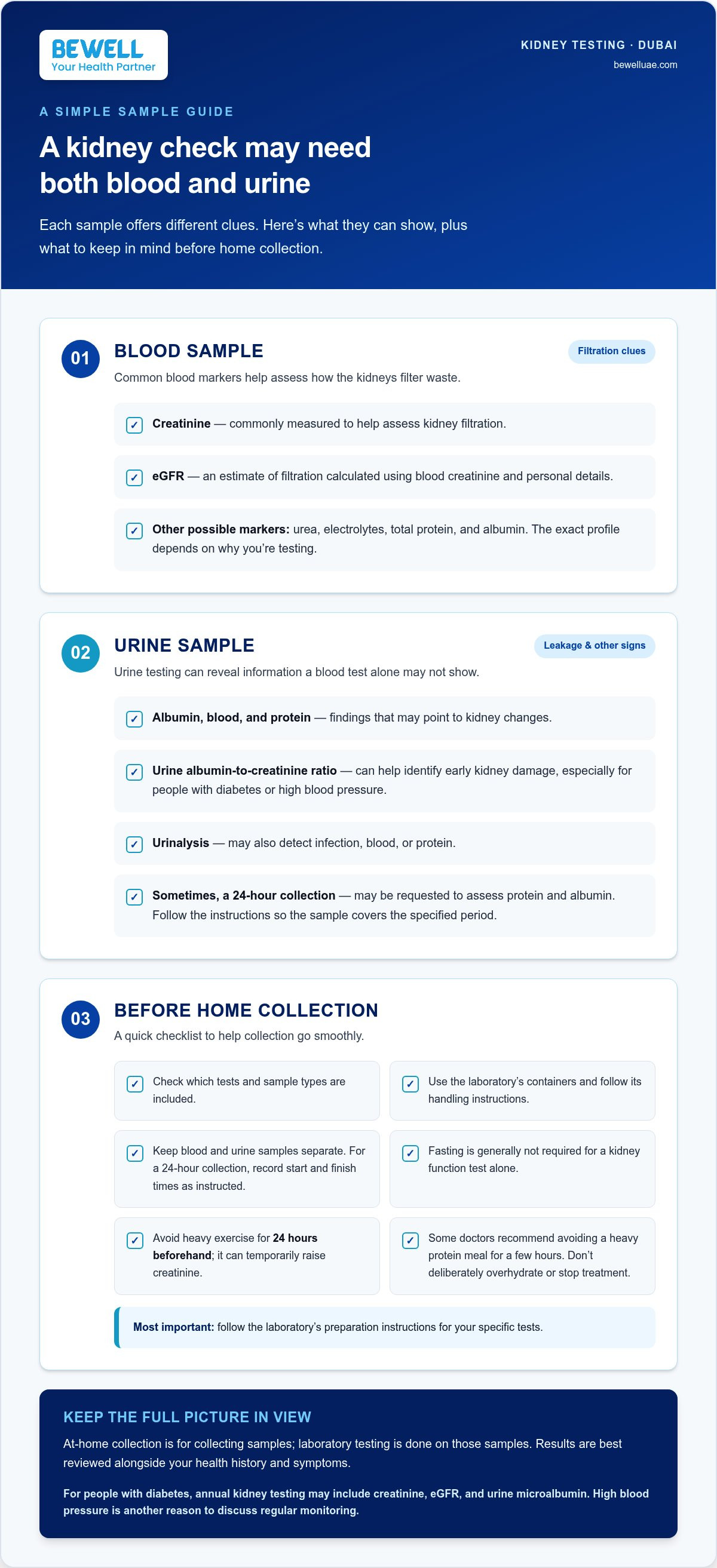
Sometimes. A kidney assessment may use blood and urine samples because each provides different information. Blood tests commonly measure creatinine and support an estimated glomerular filtration rate (eGFR) calculation. Urine testing can check for albumin, blood, and protein, which may indicate kidney changes. A blood test alone may not show the full picture.
A urine albumin-to-creatinine ratio can help identify early kidney damage, particularly for people with diabetes or high blood pressure. A urinalysis may also detect infection, blood, or protein. In some cases, a healthcare professional may advise a 24-hour urine collection to assess protein and albumin. Follow the collection instructions carefully, since the sample needs to represent the specified period.
For people with diabetes, annual kidney function testing may include creatinine, eGFR, and urine microalbumin. High blood pressure is another reason to discuss regular monitoring. These checks assess kidney filtration and possible protein leakage, even when symptoms aren’t obvious. A clinician may also consider blood pressure readings and other health information when reviewing results.
Are at-home kidney function tests in Dubai performed by licensed laboratories? Home collection may be carried out by licensed healthcare professionals, while laboratory testing is performed on the collected samples. The home visit is for sample collection; it doesn’t replace laboratory analysis.
How do I book a home kidney function test in Dubai? Choose the kidney blood and urine tests requested or recommended for your assessment, then arrange home collection with a testing provider. Confirm which samples are included and follow the preparation instructions for each test.
At home, blood collection typically involves a healthcare professional drawing a sample, while urine collection follows the laboratory’s container and handling instructions. Keep the samples separate and use only the containers provided. If a 24-hour collection is requested, record the start and finish times as instructed.
Does a kidney function test at home in Dubai require fasting or other preparation? Fasting is generally not required for a kidney function test alone. Avoid heavy exercise for 24 hours beforehand, since it can temporarily raise creatinine. Some doctors recommend avoiding a heavy protein meal for a few hours before testing. Don’t deliberately overhydrate or stop treatment; follow the laboratory’s preparation instructions.
Prices depend on the tests selected, sample collection, and any additional reporting or follow-up services. Ask for an itemised breakdown to see which tests and collection steps are included. A kidney panel may also include mineral measurements such as calcium, which relates to bone health and kidney mineral balance.
What Is a Kidney Function Test (KFT)?
A kidney function test, also called a renal function profile, combines laboratory markers to assess how the kidneys filter waste and balance substances in the blood. A clinician may use it to investigate symptoms, establish a baseline, or monitor a chronic condition such as diabetes or high blood pressure. The markers included depend on the reason for testing.
A profile may measure creatinine, urea, electrolytes, total protein, and albumin. Creatinine helps assess filtration, while urea is a waste product removed by the kidneys. Sodium, potassium, and chloride relate to fluid balance and other body functions. Total protein and albumin can help assess protein loss. A urine albumin test adds information about protein passing into the urine.
Some kidney panels include eGFR, an estimate of filtration calculated using blood creatinine alongside personal details. Other tests may add glucose or calcium for a wider health assessment. These markers answer different questions: glucose helps assess blood sugar, while calcium relates to mineral balance. Review the requested test list before collection so you know which samples are needed.
What do kidney function tests measure, including creatinine, eGFR, urea, and urine albumin? Creatinine and eGFR help assess blood filtration; urea measures a waste product, and urine albumin testing looks for protein leakage. Together, these results provide a broader view than any single marker.
Home collection changes where the sample is taken, not what the laboratory measures. How accurate are home kidney function tests compared with testing at a clinic? Results can be comparable when the same laboratory methods are used and samples are collected, stored, and transported correctly. Proper collection and following preparation instructions matter.
Health packages may combine a renal profile with other screening tests, such as glucose or cholesterol measurements. A package may suit someone seeking a broader baseline, while a standalone profile may better match a specific monitoring plan. Compare the included markers and sample types rather than relying on the package title alone.
Does Dubai health insurance cover home kidney function tests? Coverage depends on the policy’s benefits and whether the test is physician-ordered. A plan may treat the laboratory test and home collection differently, so review the relevant policy terms before booking.
For a clear cost comparison, request an itemised quotation that separates the renal profile, each additional marker, home collection, consumables, reporting, and follow-up charges. The total depends on the selected tests and collection arrangements; the price is provided after a quote request. If you’re comparing a standalone profile with broader screening, explore these health checkup options.
Interpreting abnormal results
An out-of-range kidney result is a signal to review, not a diagnosis on its own. Creatinine, eGFR, and urine albumin each describe different aspects of kidney health. Hydration, recent strenuous exercise, medicines, and the laboratory’s reference range can also affect results. Compare the report with previous results and consider the circumstances around sample collection.
Chronic kidney disease requires evidence of kidney abnormality that persists for at least 3 months. One abnormal blood or urine result therefore doesn’t establish chronic disease. A doctor considers repeat measurements, medical history, blood pressure, and other findings before interpreting the pattern. DCDC notes that a single result may not represent the full picture, and kidney assessment can combine blood and urine measurements.
For urine albumin-to-creatinine ratio, a result below 30 mg/g is listed as the normal range. A higher result can indicate albumin leakage and needs interpretation alongside other findings. The doctor may review urine results with creatinine and eGFR, then decide whether repeat testing or further assessment is appropriate. Keep the full report, including units and reference ranges, for that discussion.
How soon are home kidney test results available in Dubai, and how are they delivered? Health24/7 says most at-home blood test reports are shared within 24 to 48 hours, depending on the test. The report is shared with the patient; its results should then be reviewed in context with a doctor.
Start with the flagged value, its unit, and the laboratory’s reference range. Then check whether the report includes a blood marker, a urine marker, or both. For example, raised creatinine with lower eGFR gives a different combined picture from an isolated urine albumin result. Bring earlier reports to your clinic when available, since changes over time can help with interpretation.
A clinician may consider factors that affect results before deciding on next steps. Recent heavy exercise can temporarily raise creatinine, while dehydration can influence some measurements. Tell the doctor about medicines, supplements, recent illness, and any preparation instructions you followed before collection. Don’t stop prescribed treatment based on a laboratory flag alone.
If a sample issue or unexpected result is suspected, the doctor can decide whether repeat sample collection is needed. Follow the laboratory’s instructions for any repeat blood or urine test, and use the same units when comparing reports. A clear record of dates, symptoms, and results helps the clinician assess whether an abnormality persists for the required 3 months.
Seek timely medical review for a markedly abnormal report or new symptoms such as swelling, reduced urination, or breathlessness. For a stable, unexpected result without new symptoms, arrange a doctor’s review and bring the complete report. eGFR, urine albumin, and your clinical history together help guide what happens next.
Understanding creatinine, urea, uric acid and eGFR
Creatinine is a waste product measured in blood and used to assess kidney filtration. If filtration is reduced, creatinine may rise. An abnormal result needs context: muscle mass, recent strenuous exercise, hydration, and medicines can affect interpretation. Compare it with earlier results and the laboratory’s reference range rather than judging one figure alone.
eGFR estimates how well the kidneys filter blood. It is calculated using blood creatinine together with a person’s age and sex. An eGFR of 90 or above is generally normal, while a value below 60 can indicate that kidney function is reduced. The result is an estimate, not a direct measurement, so clinicians read it alongside urine findings and medical history.
For chronic kidney disease staging, eGFR below 15 mL/min/1.73m² is Stage 5, and 15-29 mL/min/1.73m² is Stage 4. These ranges describe filtration levels, but a stage should not be inferred from one test alone. Chronic kidney disease diagnosis requires abnormalities to persist for at least 3 months. A doctor considers repeat results and other evidence of kidney damage.
Creatinine-based eGFR may not tell the entire story for everyone. Cystatin C is another blood marker that can help assess kidney function and may detect dysfunction earlier than creatinine. A clinician may consider it when creatinine-based results need clarification. The markers provide different information, so interpretation depends on the clinical question and the full report.
Urea is another waste product filtered by the kidneys. High urea can be associated with reduced kidney function or dehydration, so fluid intake and other health factors matter. Uric acid has a different role: elevated levels are linked to gout, kidney stones, and metabolic disorders. A uric acid result alone doesn’t measure filtration; review it alongside creatinine, eGFR, symptoms, and relevant health history.
Use a simple review sequence for a kidney blood report:
- Identify the result, unit, and reference range shown by the laboratory.
- Compare creatinine and eGFR, then note whether either has changed from an earlier test.
- Review urea and uric acid as separate markers, not substitutes for eGFR.
- Bring urine protein or albumin results to the same appointment, since they add evidence about kidney damage.
Age also affects eGFR interpretation. The listed average decline is approximately 1 mL/min per year after age 40, but an individual result still needs clinical context. If a report flags an abnormal value, discuss the pattern with a doctor rather than changing prescribed treatment based on a single number.
Kidney function test purpose and symptoms
Kidney screening can identify changes before they cause obvious symptoms. It’s especially relevant for people with diabetes, high blood pressure, heart disease, or a family history of kidney disease. These conditions can make monitoring more important, even when someone feels well. Laboratory tests help clinicians review filtration and possible kidney damage alongside a person’s health history.
Symptoms can also prompt a discussion about testing. Examples include swelling in the legs, feet, or face, persistent fatigue or weakness, and changes in urination. High blood pressure, diabetes, or prediabetes are additional reasons to consider kidney checks. These signs don’t identify a cause on their own, so tell your clinician when they began and whether they’re changing.
Testing frequency depends on risk and medical history. For people with diabetes, annual kidney function testing may include creatinine, eGFR, and urine microalbumin. Adults over 40 without kidney disease risk factors may have testing every 1-2 years. These intervals are useful reference points, while existing kidney disease or changing symptoms may call for a different monitoring plan.
Blood and urine results answer related but different questions. Creatinine and eGFR help assess how well the kidneys filter blood. Urine albumin can reveal protein leakage, while urinalysis may detect blood or other abnormalities. For example, someone with diabetes may need both blood markers and urine microalbumin to monitor kidney health, rather than relying on one result.
Before collection, tell the clinician about diabetes, blood pressure treatment, recent illness, and medicines. Fasting is generally not required for a kidney function test alone, but follow the laboratory’s instructions for the specific panel. Avoid heavy exercise for 24 hours before testing because it can temporarily affect creatinine. Keep usual treatment unchanged unless the prescribing clinician advises otherwise.
Hydration can influence some results, so follow preparation guidance and don’t deliberately drink excessive water before sample collection. Bring earlier laboratory reports when available. Comparing dates, units, and trends gives a clinician more context than reviewing a single flagged result. If swelling or changes in urination are new, mention them when discussing the test.
Arrange kidney blood testing to discuss screening based on your risk factors.
Bewell: Health Checkup Packs
Bewell offers Health Checkup Packs and Blood Tests for people planning routine screening or following up on a health concern. If a clinician has recommended kidney monitoring, a blood test can form part of that assessment. Review the requested markers and any urine testing with your healthcare professional so your results address the reason for testing.
Health Checkup Packs may suit readers looking beyond a single measurement, while a specific Blood Test can support a focused request. Bewell also offers Health Scans and IV DRIPS & INJ as part of its wider health services. Choose your next step based on your clinician’s advice and the results you need to follow.
Visit bewelluae.com to learn more or contact Bewell.
Make your next step a clear one
Use your results to prepare for a focused conversation about kidney health. Keep the laboratory report with a short note about your symptoms and medicines, along with questions you want answered. This gives your healthcare professional useful context for discussing what to do next.
If arranging a kidney function test at home in Dubai is your next step, choose testing that matches your clinician’s recommendation. Consider how the report will be shared and what support is available to understand the findings. Bewell offers Health Checkup Packs, Blood Tests, and IV DRIPS & INJ as part of its health services.
A thoughtful, informed next step can make it easier to stay engaged with your health. Keep your questions close and move forward at a pace that feels manageable.
Frequently Asked Questions
How much does the home service cost?
The cost depends on the kidney tests selected and the home collection arrangements. Ask for a quotation that separates the laboratory panel from sample collection and any additional services. This helps you compare what’s included before booking. If you have a doctor’s request, use it to identify the required tests and avoid choosing a broader package without a clear reason.
What happens after the home visit?
After collection, the sample is sent to a laboratory for the selected tests. Once processing is complete, you receive a digital report. Keep the full report, including units and reference ranges, and share it with the doctor who requested the test. If you’re tracking results over time, retain earlier reports too, so changes can be reviewed together.
What happens during the appointment?
A nurse checks your photo ID and collects the sample needed for the booked panel. Wear clothing that allows easy access to your arm if blood collection is required. Have any doctor’s request and preparation instructions ready. If your appointment includes a urine sample, follow the laboratory’s container and handling directions so the sample is suitable for testing.
Which kidney function tests can be done at home in Dubai?
Home appointments can be used to collect blood for a kidney panel, with the markers determined by the requested tests. A panel may include creatinine, urea, electrolytes, and calculated eGFR. Urine albumin or urinalysis requires a urine sample, so confirm which sample types your requested panel needs when arranging a kidney function test at home in Dubai.
Which Dubai labs offer at-home kidney function testing?
Bewell offers Blood Tests and home sample collection in Dubai, Sharjah, Abu Dhabi, and Ajman. Its nurses and laboratories are certified by the Ministry of Health and Dubai Health Authority. Have the requested test names ready when arranging an appointment for a kidney assessment. This helps align sample collection with the panel your healthcare professional recommended.
How much does a home kidney function test cost in Dubai?
The total depends on the selected test panel and home collection arrangements, so request a quotation for your specific requirements. Ask for an itemised breakdown showing the laboratory tests, collection, and any additional services. If a doctor has specified individual markers, provide the list when requesting a quote. This makes it easier to compare the proposed test scope with your clinical request.
What symptoms or risks mean I should seek urgent medical care instead of booking a home test?
Seek urgent medical care if symptoms are severe or worsening quickly rather than waiting for a routine home appointment. A home kidney test is intended for sample collection and laboratory assessment, not urgent evaluation. For concerning symptoms that are not rapidly worsening, contact your healthcare professional to discuss the appropriate next step and whether kidney testing should form part of the assessment.

Article by
Ph.Fares
He is a pharmacist, healthcare entrepreneur, and preventive healthcare advocate with a Bachelor of Pharmacy from the University of Sharjah. He is a Health Coach at Bewell Therapeutic Services in the UAE, where he focuses on making preventive healthcare more accessible through digital health solutions, laboratory testing, health screenings, and personalized checkup packages.
With experience spanning pharmacy practice, medical sales, laboratory services, healthcare marketing, and business development, Fares combines pharmaceutical knowledge with commercial and technological expertise. His professional mission is to promote health awareness, encourage early disease detection, and help individuals make informed decisions about their health through accessible, patient-centered healthcare services.
